presents

Canada
thyssenkrupp Materials North America
Pourquoi le cuivre est essentiel pour les centres de données IA et les solutions énergétiques de haute technologieby Mark Kowalski and Tom McClenahan
L'intelligence artificielle (IA), l'infonuagique et les appareils connectés transforment les façons de travailler, de communiquer et d'innover. Quel que soit le nouveau modèle de données, le capteur intelligent ou la plateforme connectée, le même principe demeure : il faut une transmission d'énergie fiable et efficace. Si les logiciels alimentent l'intelligence, ce sont des matériaux comme le cuivre qui concrétisent cette transformation.
Derrière la révolution numérique, la demande énergétique explose. Les centres de données hébergeant les tâches liées à l'IA consomment aujourd'hui autant d'énergie que de petites villes, alors que des milliards d'appareils connectés exigent une alimentation stable et performante. Cette convergence des technologies accroît la nécessité de recourir à des matériaux offrant conductivité, durabilité et rendement environnemental supérieurs.
Grâce à ses propriétés électriques et thermiques inégalées, le cuivre se trouve au centre de cette évolution. Des feuilles ultra-minces pour l'électronique de pointe jusqu'aux barres omnibus robustes qui alimentent les installations hyperscale, le cuivre propulse l'innovation à toutes les étapes de l'écosystème énergétique et technologique mondial.
Du mince au massif : le cuivre dans la distribution d'énergie
Le cuivre occupe un rôle central dans les systèmes électriques modernes, bien au-delà du simple câblage. Autrefois utilisé principalement comme norme électrique, il est aujourd'hui un vecteur de progrès dans tous les secteurs, de la microélectronique aux grandes infrastructures.
Il y a des décennies, les producteurs de cuivre ont anticipé la demande de feuilles ultra-minces et hautement performantes pour répondre à l'essor de l'électronique compacte et rapide. Cette anticipation s'est confirmée. De nos jours, la demande en cuivre concerne le spectre complet : des feuilles fines de quelques micromètres essentielles aux téléphones intelligents et appareils portables, jusqu'aux conducteurs robustes alimentant centres de données, installations d'énergie renouvelable et véhicules électriques.
Cette flexibilité rend le cuivre irremplaçable à tous les niveaux du secteur de l'énergie. Qu'il s'agisse de transmettre des signaux dans un capteur portable ou de stabiliser le courant dans un centre de données de 100 mégawatts, le cuivre demeure le matériau de référence pour la sécurité, l'efficacité et la fiabilité.

Le ruban de cuivre est essentiel dans les batteries lithium-ion, les écrans flexibles et les PCB. Pour répondre à la demande de recharge rapide, de légèreté et de fonctionnalités accrues, les fabricants se tournent vers le cuivre pour équilibrer la performance, la durabilité et la rentabilité.
Les feuilles de cuivre ultra-minces jouent un rôle clé dans les systèmes de stockage d'énergie de pointe en tant que collecteurs de courant dans les batteries. Elles améliorent la vitesse de recharge et la densité énergétique, deux facteurs qui façonnent l'évolution des véhicules électriques et de l'électronique de prochaine génération. À mesure que progresse la technologie des batteries en capacité et efficacité, la précision et la qualité du cuivre deviennent encore plus cruciales pour la sécurité et le rendement.
Cuivre massif : soutenir la croissance de l'IA et des centres de données
Tandis que le cuivre mince favorise la miniaturisation, les composants de cuivre massif sont fondamentaux pour les systèmes de haute puissance propulsant l'ère numérique. La montée rapide de l'IA, de l'infonuagique et de l'analytique en temps réel entraîne une croissance historique de la construction de centres de données à grande échelle et de leur consommation énergétique.
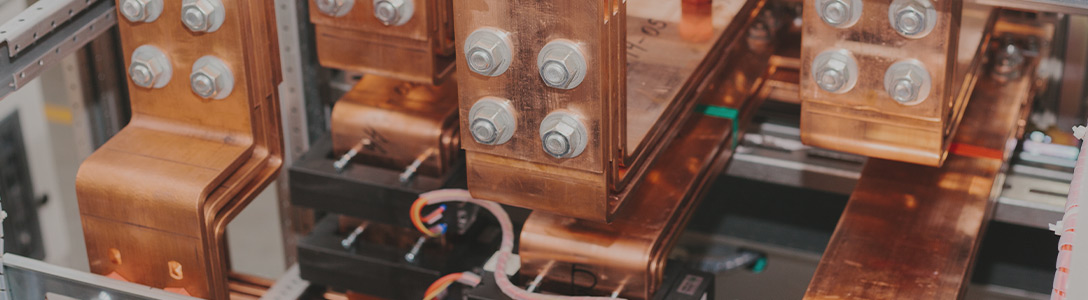
Au cœur de ces installations, les barres omnibus en cuivre assurent un courant stable et volumineux avec un minimum de pertes. Leur conductivité hors pair garantit la continuité opérationnelle tout en limitant le risque de pannes coûteuses. Leurs solides propriétés thermiques assurent une dissipation efficace de la chaleur, permettant aux serveurs et équipements électriques de fonctionner en toute sécurité même sous de lourdes charges, ce qui est primordial alors que les tâches IA s'intensifient.
Selon Goldman Sachs Research, la demande mondiale d'électricité des centres de données pourrait augmenter de plus de 160 % d'ici 2030, soit jusqu'à 4 % de la consommation électrique mondiale. Cela souligne à quel point l'efficacité et la recyclabilité du cuivre sont vitales à la durabilité des infrastructures numériques. Réduire la résistance et optimiser la gestion thermique augmentent la fiabilité tout en réduisant directement les coûts énergétiques et les émissions de carbone.
Alliages de cuivre haute performance pour une transmission fiable
Dans le domaine de l'électrification, avec la grande variété d'alliages de cuivre disponibles, les ingénieurs disposent de matériaux répondant à presque toutes les exigences électriques et mécaniques. Les progrès en développement d'alliages et en traitement de précision permettent au cuivre d'offrir des solutions allant des conducteurs massifs des barres omnibus aux rubans ultra-minces pour connecteurs et circuits imprimés.
Dans l'électronique grand public, les véhicules électriques et les systèmes de batterie avancés, les alliages spécialisés assurent un équilibre idéal entre formabilité, résistance à la corrosion et robustesse, sans compromis sur la conductivité propre au cuivre. Les métallurgistes y parviennent en ajoutant du béryllium, de l'étain, du nickel ou du fer, chaque élément contribuant à améliorer des propriétés précises selon l'application. Résultat : des alliages conçus pour répondre à plusieurs critères de performance, alliant conductivité électrique et thermique élevée, résistance mécanique, et stabilité thermique et dimensionnelle.
Dans des environnements exigeants comme les centres de données d'IA, les installations d'énergies renouvelables ou l'automatisation industrielle, chaque watt compte. Les grades de cuivre de grande pureté, tels que C101, C102, et C110, offrent une performance électrique exceptionnelle avec une faible perte au fil du temps. Ces alliages offrent :
- Une conductivité élevée pour minimiser les pertes.
- Une robustesse élevée pour une longue durée de vie.
- Une stabilité thermique même sous de fortes charges électriques.
Ces propriétés rendent les alliages de cuivre premium indispensables pour les barres omnibus, les appareillages de commutation et les systèmes de mise à la terre qui assurent une distribution d'énergie performante, stable et fiable, partout où c'est essentiel.
Le rôle croissant du cuivre dans les technologies émergentes
La transition mondiale vers l'électrification et la connectivité continue de redéfinir la valeur du cuivre dans tous les secteurs. Sa conductivité, sa gestion thermique supérieure et son adaptabilité à la fabrication en font la base des technologies du XXIe siècle. De l'IA aux énergies renouvelables et aux télécommunications avancées, le cuivre accompagne l'innovation et la rend possible.


Bâtir l'infrastructure de demain
Du plus petit capteur au plus grand centre de données, le cuivre relie l'univers physique et numérique. Sa combinaison unique de conductivité, de stabilité thermique et de polyvalence en fait un pilier dans le développement de technologies plus intelligentes et durables. À mesure que les industries avancent vers une électrification généralisée, l'automatisation et l'innovation portée par l'IA, le cuivre demeurera incontournable pour bâtir un avenir connecté et performant.
Chez tk accelis Matériaux Plus, nous permettons aux entreprises de tirer pleinement parti du cuivre grâce à des matériaux hautement performants, conçus pour les applications énergétiques et électroniques exigeantes. Notre réseau mondial de chaîne d'approvisionnement et nos services à valeur ajoutée permettent à nos clients d'optimiser leur performance, d'accroître leur valeur et de préparer leurs activités pour les technologies d'avant-garde.
Pour les centres de données, nous proposons la fabrication sur mesure de barres omnibus et des programmes de préparation d'ensembles préassemblés pour simplifier l'installation et optimiser la distribution d'énergie. Nos services de finition à valeur ajoutée, allant du revêtement époxy au placage, prolongent la durée de vie des composants et assurent leur performance même dans des environnements difficiles. Notre équipe possède une expertise approfondie dans la sélection des alliages de cuivre, permettant à nos clients de cibler l'équilibre parfait entre conductivité, robustesse et gestion thermique pour chaque application.
Vous souhaitez renforcer votre infrastructure énergétique ? Communiquez avec notre équipe pour savoir comment tk accelis Matériaux Plus peut vous aider à exploiter tout le potentiel du cuivre pour soutenir vos innovations et vos opérations.
Source
Goldman Sachs. (2025, 4 février). AI to drive 165% increase in data center power demand by 2030. Tiré de : https://www.goldmansachs.com/insights/articles/ai-to-drive-165-increase-in-data-center-power-demand-by-2030